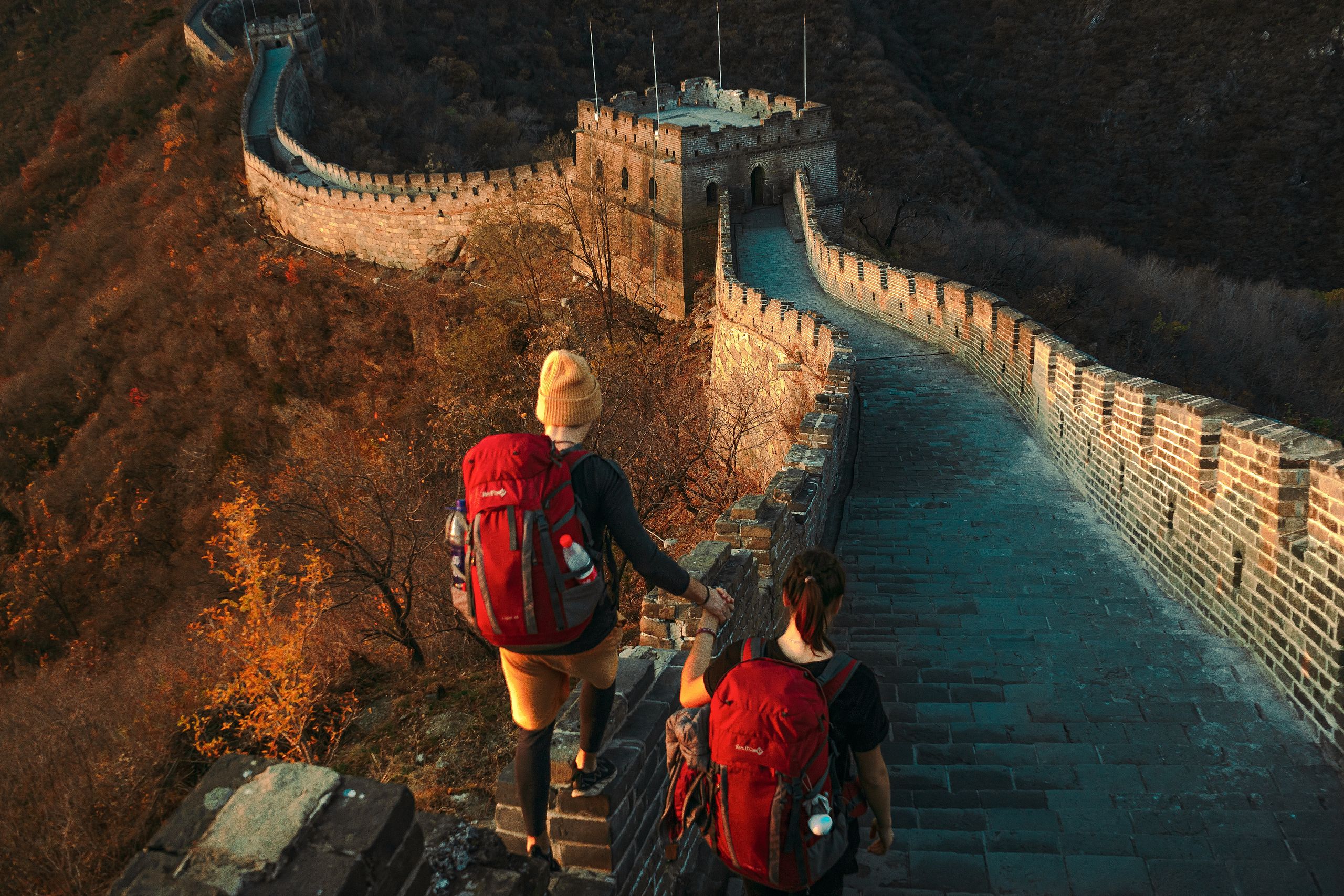
The Great Wall DIY Travel & Best Gear in Hot 34°C Summer
TRANSIT-INSPIRED DAILY WEAR
A breathable, soft transit tee built to handle 34°C summer humidity, 29 metro lines, and the 80km round-trip to the Great Wall — without becoming the problem.
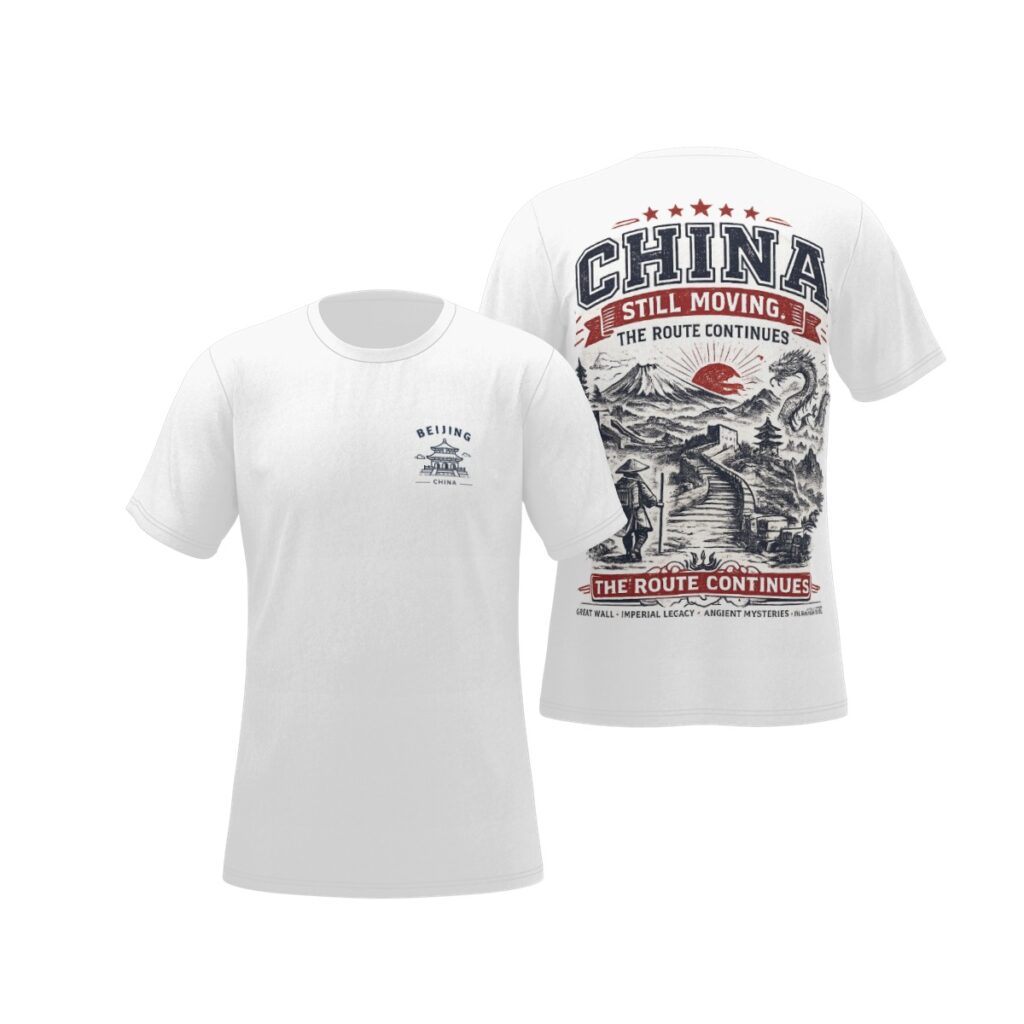
This isn’t a gear review. It’s a transit guide. This experience was shared by a member of the Tour & Tell Travel community and has been edited for clarity and structure. Costs, routes, and recommendations should be verified before travel.
The shirt is just the thing that makes the transit tolerable when the city is running at peak summer and every stone surface is radiating back everything the sun gave it since 6am.
🌞
- The Forbidden City is 720,000 square metres of open-air heritage with no shade infrastructure.
- The Temple of Heaven is another open expanse.
- The Mutianyu Great Wall bus drops you in a mountain valley where the trail has full sun exposure until 10am.

The metro solves the transit. It does not solve the heat at the destination. What you wear between the air-conditioned carriage and the stone courtyard is the only climate management you control.
A breathable, soft daily-wear tee that moves moisture, layers under nothing, and doesn’t compound the heat index is the one gear decision that runs through every day of this route — from the platform at Tiananmen East to the ridgeline at Mutianyu.
From Capital Airport to the Forbidden City to Mutianyu — all on the metro and public bus, at the right fare, in heat that doesn’t negotiate.
A practical, self-guided metro itinerary through Beijing’s historic core and outer districts — anchored on the subway system, verified bus routes to the Great Wall, and the real logistics of moving through a city with 29 metro lines in 34°C summer heat. Fares verified June 2026.
Beijing Metro Fare Calculator — What Your Journey Actually Costs
Distance-Based Fare System (All Lines Except Airport Express)
📍
12 KM
- Standard Line (¥3–¥9+)
- Capital Airport Express (fixed)
- Daxing Airport Express (distance)
¥4
- 12km journey on standard line. Fares start at ¥3 for up to 6km, ¥4 for 6–12km, then ¥1 per additional 10km up to 32km.
💡 Key payment fact for tourists: Since mid-2025, Beijing metro supports “tap-and-go” with Visa, Mastercard, and Amex contactless at all station gates on 27 lines including both airport express lines. A rechargeable Yikatong IC card is also available at any station window. Suica/Octopus and other foreign IC cards are not compatible. Cash single-journey tickets are available at all ticket machines with English interfaces.
The Layered System You Need to Understand First
30-Day Visa-Free Entry
As of 2026, citizens of 36+ countries — including most of Europe, Australia, New Zealand, Japan, South Korea, UAE, and several South American countries — receive 30-day visa-free entry to China for tourism. Verify your specific nationality at the official China visa authority before travel. The list has expanded significantly since 2024 and continues to change.
240-Hour Transit Visa-Free
Citizens of 55 eligible countries (including USA, UK, Canada, Indonesia, and others not covered by the 30-day policy) can enter China for up to 240 hours (10 days) without a visa if transiting to a third country. Requires a confirmed onward ticket to a non-Chinese destination. Beijing Capital Airport is a designated entry port. The 240-hour period starts at 00:00 the day after arrival.
Standard Tourist Visa Required
If your nationality is not covered by visa-free or 240-hour transit policies, you must apply for a Chinese tourist visa (L visa) in advance at a Chinese embassy or consulate. Processing times vary. Apply well in advance of travel dates. Confirm your country’s status through official channels — this information changes frequently and is policy-sensitive
Arrival Card (All Visitors)
Since November 2025, all foreign visitors complete an electronic arrival card before or at immigration — via the NIA website, the “NIA 12367” app, WeChat/Alipay mini-programs, or on-site kiosks. Paper cards remain available as a fallback. Complete digitally in advance to save time at immigration. Required regardless of visa status.
Realistic Daily Budget — 7 Days Per Person / Solo Traveler
In Chinese Yuan (¥ / RMB). Budget tier = hostel/budget hotel + metro + local food + attraction entry. Mid-range = 3-star hotel + same transport + mixed dining. Excludes international flights.
⚠️Entry fee verification required: Forbidden City tickets — ¥60 high season (Apr 1–Oct 31), ¥40 low season — must be booked in advance via the Palace Museum’s official website (dpm.org.cn). The Forbidden City is closed on Mondays and frequently sells out days ahead during peak season (July–October). Temple of Heaven, Summer Palace, and Lama Temple require separate booking or on-site purchase. Confirm all entry fees and booking requirements before travel — prices and booking systems change.
7-Day Total (Excl. International Flights)
| ~¥1,230–¥1,900 | ~¥2,480–¥4,260 |
Through Delays and Detours
Transit-Inspired Statement Tee · Daily Wear · POD
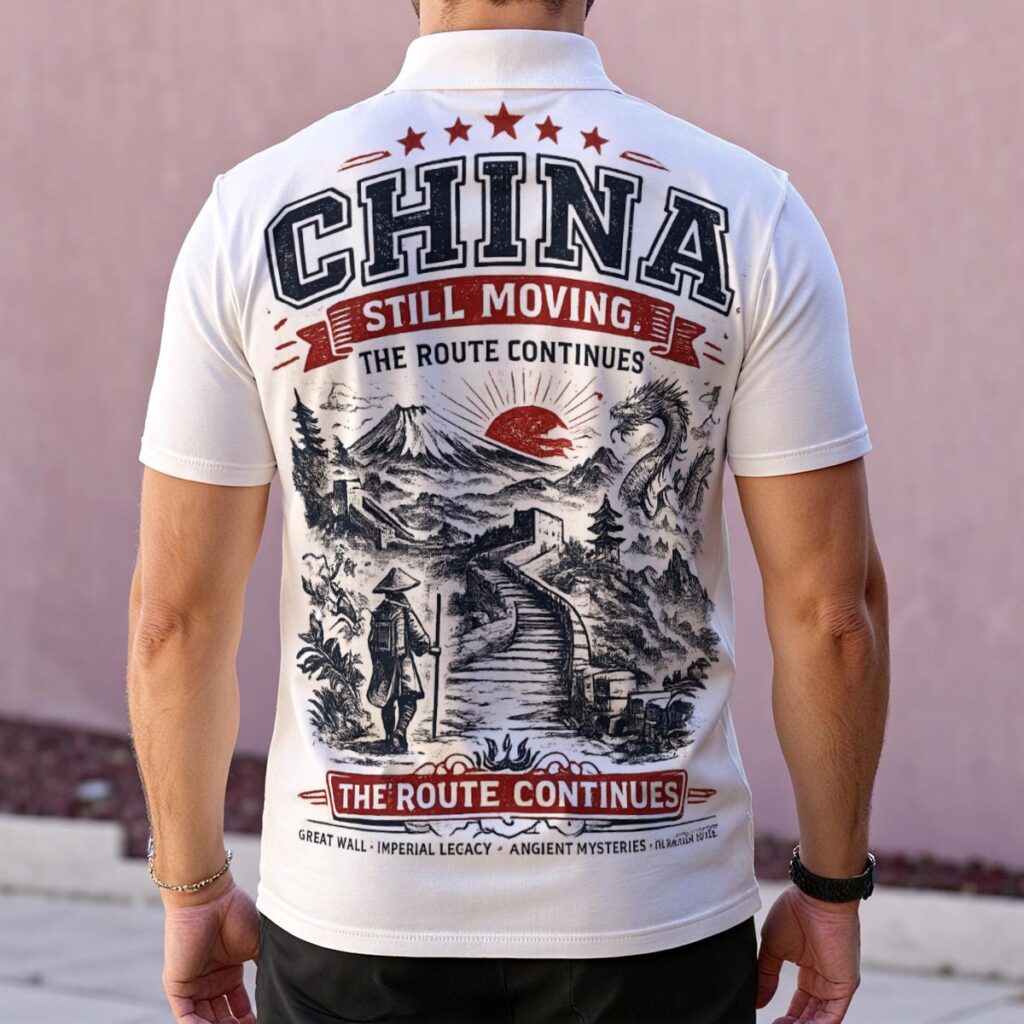
The Backgrid Manifesto series features transit-inspired, raw typography designed to make your independent travel ethos unapologetically clear to the world behind you.

Arrival Route Logistics
The Airport Express Line runs from Terminal 2 and Terminal 3 to Dongzhimen Station (Line 2/Line 13 transfer hub) in approximately 25–30 minutes. Fixed fare: ¥25. This is the fastest and most reliable city connection and avoids highway traffic entirely. From Dongzhimen, connect to any metro line. The Airport Express operates approximately 06:20–23:10 (confirm current hours). Important: the Airport Express uses a separate fare gate from the standard metro — it cannot be combined into a single tap. Buy separately at the airport express window or tap-and-go at the dedicated Airport Express turnstile
The Daxing Airport Express (also called the Beijing-Xiongan R1 Line, fully opened 2026) runs from Daxing Airport to central Beijing. Fare: ordinary class ¥10–¥35 depending on distance; business class fixed ¥50. The line connects to the city metro network at several interchange stations. Journey to central Beijing approximately 40 minutes. Confirm current operating hours and station connections — this line’s full network integration expanded in 2026 and schedules may differ from earlier published information
Metro: Line 1 to Tiananmen East Station or Tiananmen West Station. Tiananmen Square is free to access. The Forbidden City (Palace Museum) is directly north. Pre-booked ticket (dpm.org.cn) is mandatory — scan QR code at entry. The Forbidden City is closed on Mondays — plan Day 2 on a non-Monday. Exit north through Shenwu Gate and walk 5 minutes to Jingshan Park (¥2 entry, views over the Forbidden City rooftop grid from the hill).
Metro: Line 5 to Tiantan East Gate Station or Line 1 to Heping Li North. The Temple of Heaven Park is a large complex — the All-Inclusive ticket covers the park plus all inner buildings. Book in advance or purchase on-site (confirm current availability). For the Hutong walking district, Nanluoguxiang is on Line 6 (Nanluoguxiang Station). Shichahai area and the Drum Tower are a short walk from Gulou Dajie Station on Line 6. Hutong walking is best in the morning — the alleys are narrow and the midday summer heat is intense.
Tourist bus from Qianmen (near Tiananmen): departs 07:00–10:00, round-trip ¥80. Metro to Qianmen: Line 2 or Line 1. Journey to Mutianyu: approximately 1.5 hours. At the Great Wall entrance, a shuttle bus takes you up to the wall (included in some packages — confirm). Cable car or chairlift up (¥100+); toboggan down is a separate option (~¥100). Go up by the first bus of the morning — the wall’s ridge is fully exposed sun from 10:00 onwards. Return buses collect from Parking Lot P4 from 13:00. Buy entry tickets in advance during peak season — some operators include entry in the bus package, others do not.
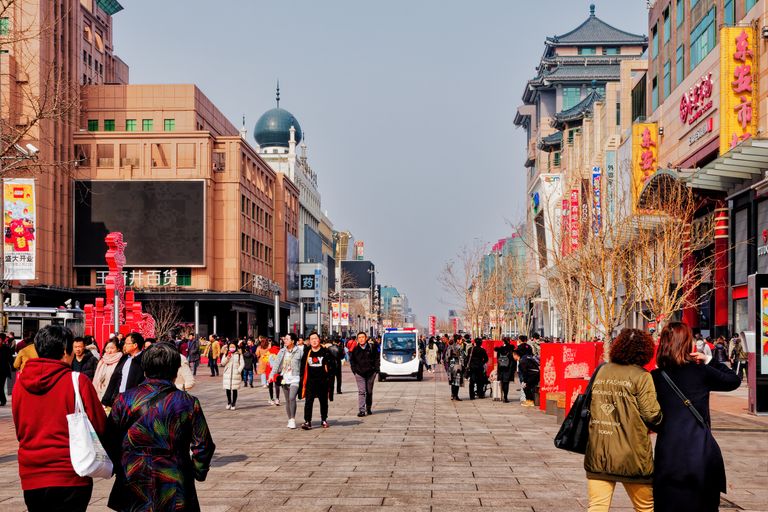
Metro: Line 4 to Beigongmen Station or Xiyuan Station. The Summer Palace (Yiheyuan) entry: ¥30 basic, inner areas (Dehe Yuan, Wenchang Ge) require separate add-on tickets purchased at the park. The park is large — Kunming Lake, the Long Corridor, Suzhou Street — and the full circuit in summer heat takes 3–4 hours. Go early. The Long Corridor (728 metres of painted pavilions) provides shade — use it. Combine with Wangfujing Shopping Street in the afternoon (Line 1, Wangfujing Station) for street food and air-conditioning.
Lama Temple (Yonghe Gong): Line 2 / Line 5 to Yonghegong Lama Temple Station. Entry approximately ¥25. The largest and most important Tibetan Buddhist temple in Beijing — functioning monastery, not a museum. Visit in the morning before the heat peaks. 798 Art District: take Line 6 east to Jintailu Station or Qingnianlu Station, then walk or take a short Didi. Decommissioned 1950s factory complex now housing galleries, studios, and cafes. No general entry fee — individual gallery fees vary. Nanluoguxiang (hutong commercial strip): Line 6 Nanluoguxiang Station.
Field Notes — the Hidden Geometry
your Quick Getting-Home Guide
Airport Express from Dongzhimen Station (Line 2/13 interchange) to T2 or T3: fixed ¥25, approximately 25–30 minutes. The Airport Express has dedicated luggage areas and runs from approximately 06:20 to 23:10. Confirm current hours. Allow 3 hours before international departure for check-in and security at PEK. The express train is faster and more reliable than any taxi or Didi option during peak hours.
Daxing Airport Express from central Beijing metro network connections. Fare ¥10–¥35 ordinary class depending on distance. Journey approximately 40 minutes from interchange stations. Check which station is most convenient to your accommodation — the line has multiple entry points on the city network. Confirm current timetable and interchange stations at bjsubway.com
Beijing South Station (Line 4) is the hub for China’s high-speed rail network — Shinkansen-equivalent speed trains to Shanghai (4h 30min–5h), Xi’an (4h 30min), Chengdu (8h+), Guangzhou (8h+). Beijing Railway Station (Line 2, Jianguomen area) handles conventional and some overnight trains. Beijing West Station (Line 7/9) serves southwest corridors. Tickets via 12306.cn — requires account registration with passport details. Third-party apps (Trip.com, Klook) offer English-interface booking with service fees.
⚠️ Departure day logistics: Do not attempt the Airport Express during rush hour (07:00–09:30) with large luggage — carriages are congested and luggage space is limited. Schedule airport departures outside rush hour when possible, or use Didi for a direct airport transfer (more expensive but door-to-door).
For First-Time Visitors – the Important Things you should Know
Chinese Yuan (¥ / RMB). China is effectively cashless — Alipay and WeChat Pay dominate. Both now support international Visa/Mastercard/Amex via their international versions. Set up before or immediately upon arrival. Carry ¥500–¥1,000 RMB cash as backup — small vendors and rural areas may only accept cash. China’s government mandated cash acceptance from merchants in February 2026, but enforcement is inconsistent. ATMs at Bank of China reliably accept foreign cards.
Google, WhatsApp, Instagram, Facebook, and most Western apps are blocked in mainland China. Download a VPN before arrival — VPNs cannot be downloaded once inside the country. Disable your VPN when using Alipay or WeChat Pay for transactions: the security system detects IP/GPS mismatches and will block payments. Use Baidu Maps for navigation (works without VPN). Google Maps works with VPN but can be slower
Mandarin Chinese. English signage is present throughout the metro system and at major tourist sites. At smaller restaurants, markets, and local transport stops, Mandarin is the primary language. Download Google Translate with Chinese (Simplified) offline pack and enable camera translation — it handles menus and signage effectively. Baidu Translate is an alternative that works without VPN.
29 lines as of December 2025. English announcements and signage throughout. Distance-based fares ¥3–¥9+ on standard lines. Capital Airport Express fixed ¥25. Tap-and-go with Visa/Mastercard/Amex at all 27 standard lines since mid-2025. Rush hours (07:00–09:30 and 17:00–19:30) are congested — avoid with luggage. Machines have English interface. App: Beijing Subway Official App has English support.
The Forbidden City, Mutianyu Great Wall (peak season), and some other sites require advance booking. Passport details required. The Forbidden City books up days to weeks in advance during summer. Do not arrive without a confirmed ticket for the Forbidden City — walk-in access is not permitted. Book via the Palace Museum official site (dpm.org.cn) or authorised third-party platforms.
July–August are Beijing’s hottest and most humid months. Heat index regularly exceeds 36°C. The Forbidden City, Temple of Heaven, and Great Wall sections have minimal shade. Schedule outdoor visits for 08:00–10:00 before the peak heat. Carry a 600ml+ water bottle — vendors inside major sites charge premium prices. Metro carriages are air-conditioned: the route between outdoor sites is the interval to recover
When to Go — Beijing by Season
Autumn (Sep–Oct)
Optimal. Clear skies, foliage, comfortable temperatures. Golden Week (Oct 1–7) is peak crowd — book everything months ahead.
Spring (Apr–May)
Good. Warm, long days. Sandstorms possible in April from Inner Mongolia. Book Forbidden City tickets early — spring is popular.
Summer (Jun–Aug)
Hottest and most humid. Peak crowds. Rainy season July–August. Plan outdoor visits before 10am. This guide is built for this window.
Winter (Nov–Feb)
Cold and dry. Fewer tourists. Forbidden City in snow has a specific atmosphere. Heavy layering required. Some outdoor sites operate reduced hours.
Discover Beijing most visited site, the reason why people keep coming back and you should too. Explore Beijing non-negotiable anchors. More to explore at The Route Files.
About Our Travel Guides and Stories
Tour & Tell Travel guides are built on real stories and experiences shared by our community, then backed by rigorous research and edited for clarity and structure. Please verify all costs, routes, and recommendations before traveling.
⚠️All transport information verified against publicly available sources as of June 2026. Confirmed details include: Beijing metro fare structure (¥3 for ≤6km, ¥4 for 6–12km, escalating per official Beijing municipal government fare page at english.beijing.gov.cn); Capital Airport Express fixed fare ¥25; Daxing Airport Express ordinary class ¥10–¥35 (Wikipedia / official sources); 29 metro lines operational as of December 27, 2025 expansion. Tourist bus Qianmen to Mutianyu ¥80 round-trip confirmed via multiple operator sources.
Visa information: 30-day visa-free policy for 36+ countries and 240-hour transit visa-free policy for 55 countries confirmed via Beijing government official announcements and China Discovery. Electronic arrival card requirement confirmed as mandatory from November 2025. Visa eligibility changes frequently — verify your specific nationality’s status via official Chinese immigration channels before booking travel.
Forbidden City entry fees (¥60 high season, ¥40 low season) sourced from China Discovery (2026). Entry fees, booking systems, and operational hours for all Beijing attractions are subject to change. Confirm current details at dpm.org.cn (Forbidden City), official attraction websites, or on-site before travel. This route requires on-site confirmation for: current Mutianyu cable car and entry fees; Temple of Heaven all-inclusive ticket pricing; Summer Palace inner area fees; and Daxing Airport Express fare for your specific boarding station.
Content produced for educational and travel-planning purposes. Transit tee product references illustrate a daily-wear garment category. Last editorial review: June 2026.
Wear the Route Lifestyle Gallery

The Micro-Route Series for low-key local immersion where you want to blend in seamlessly.
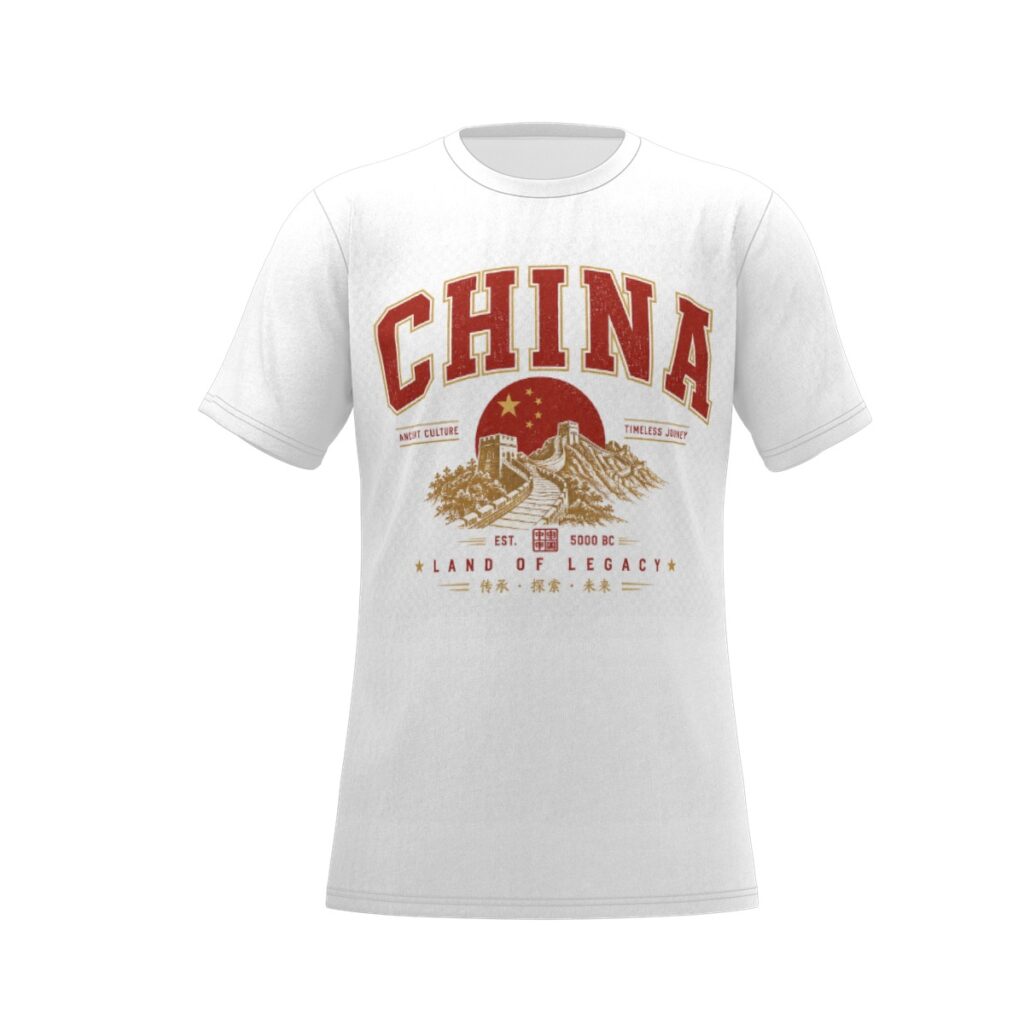
Destination Varsity Series when you need durable, high-energy comfort for long transit days.
Backgrid Manifesto Serieswhen you want to make your independent travel ethos unapologetically clear to the crowd behind you.